
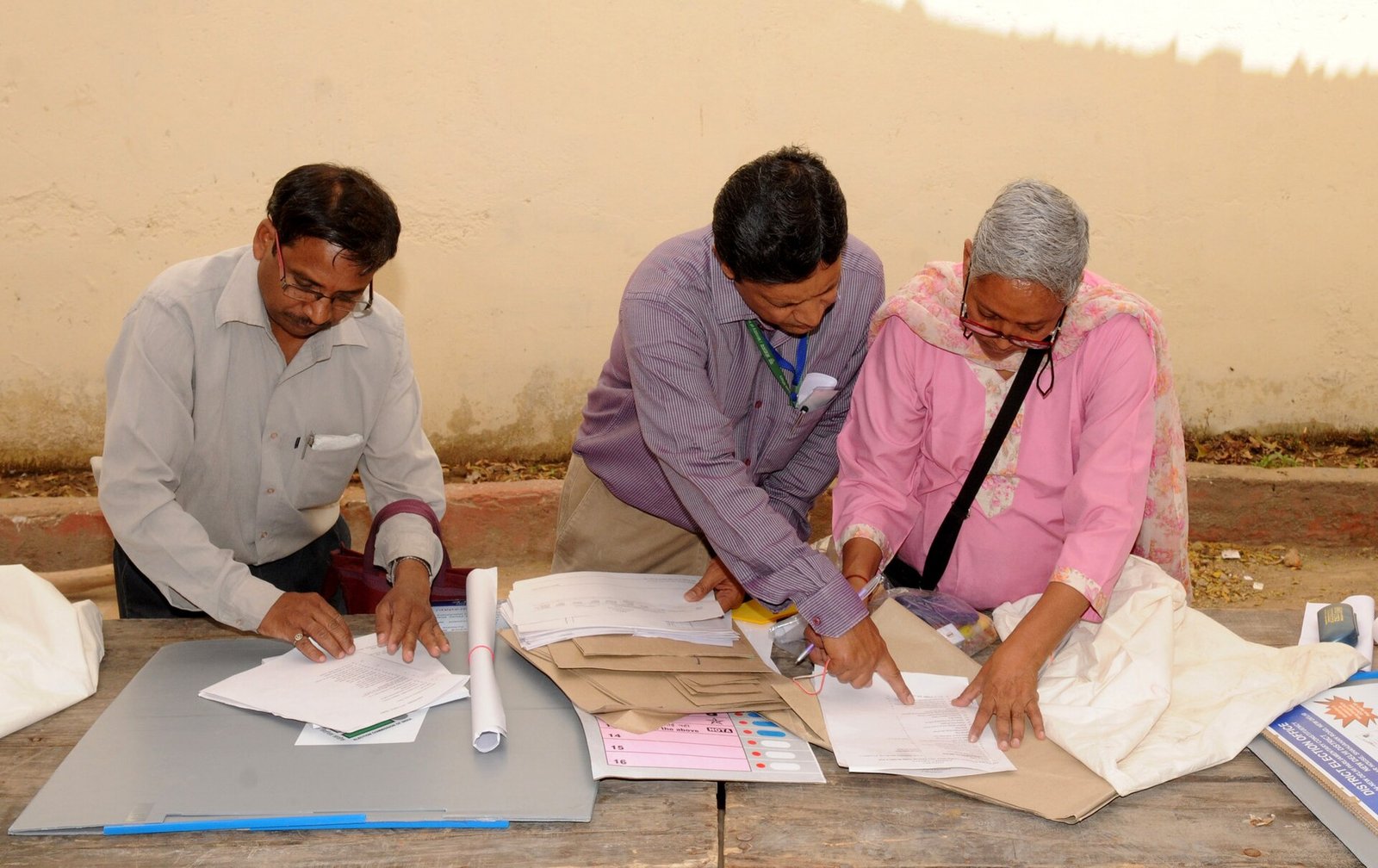
File photo: polling officials checking Electronic Voting Machines at a distribution centre in New Delhi ahead of the 2014 General Elections. Election Commission of India (GODL-India). Wikimedia Commons. Source URL. Published under GODL-India. Cropped and resized.
The Election Commission of India has ordered a special summary revision of electoral rolls in Arunachal Pradesh, Chandigarh, Dadra and Nagar Haveli and Daman and Diu, Mizoram, Odisha and Sikkim, The Hindu reported. If those initials blur together – SSR, SIR – here is what separates them, and what voters in these six places should actually do.
What the SSR is
The special summary revision is the annual, routine update of the voter list, conducted under Section 21 of the Representation of the People Act, 1950. It exists mainly to enrol newly eligible voters – especially young and first-time electors – and to take advance applications from people who will turn eligible on the qualifying dates of April 1, July 1 and October 1, 2027. The qualifying date for this revision is January 1, 2027.
The calendar, per the ECI’s order: polling-station rationalisation by November 20, draft rolls published November 30, claims and objections from November 30 to December 30, disposal by January 16, 2027 and final rolls on January 21, 2027. An earlier round on October 15 had announced the SSR for 17 States and Union Territories, including poll-bound Uttarakhand, Uttar Pradesh, Punjab, Manipur and Goa.
How it differs from the SIR
The special intensive revision was a deeper, contested exercise that asked voters to document citizenship and be mapped against old rolls. The SSR does neither, The Hindu reported: no citizenship documents are needed, and there is no mapping with earlier electoral rolls. There will also be no house-to-house verification by booth-level officers; draft and final rolls will be displayed at polling booths instead.
Aadhaar stays voluntary
The ECI’s order states that applicants can voluntarily furnish Aadhaar numbers in Forms 6 and 8, and that no application for enrolment can be rejected – nor any existing entry deleted – for failure to provide Aadhaar.
What is new this year
For the first time, the ECI has directed that at the time of polls, a readable PDF of the alphabetically arranged electoral roll can be provided to contesting candidates on a pen drive or other electronic storage – a response to Opposition demands for machine-readable, searchable rolls. Recognised political parties will also get supplementary voter lists, earlier kept only for record. The readable PDFs will not carry electors’ photographs.
What voters should do
If you live in one of the six States or UTs: check the draft roll when it is published on November 30 at your polling booth or online, and file any claim or objection by December 30. If you will turn 18 by one of next year’s qualifying dates, you can apply in advance. No documents proving citizenship are required for enrolment through the SSR.