
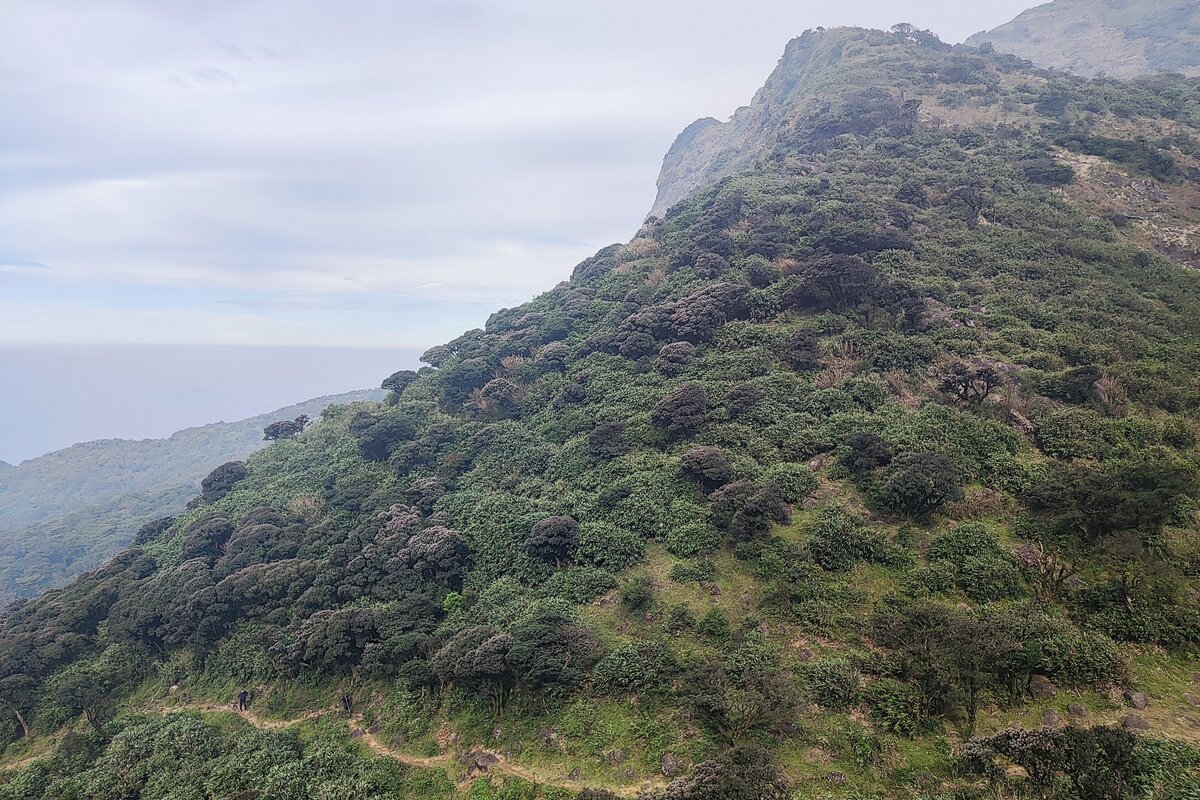
File photo: forest in the Agasthyamalai region. Shyamal. Wikimedia Commons. Source URL. Published under CC BY-SA 4.0. Cropped and resized.
The Supreme Court has recorded its prima facie view that commercial crop cultivation inside reserve forest areas is not protected under the Forest Rights Act, 2006, The Hindu reported. Here is what the order says, and what it does not.
What the court said
In a November 6 order, a Bench of Justices Vikram Nath and Sandeep Mehta recorded its prima facie view that “planned or promoted cultivation of a commercial crop inside the forest areas is completely impermissible, as no such right is recognised under the FRA, 2006.” A prima facie view is the court’s preliminary reading, not a final determination of the case.
The case before it
The order concerns extensive silk cotton cultivation within the reserve forests of the Agasthyamalai Biosphere Reserve. Of 5,072.64 hectares of forest land, 3,637.83 hectares are under silk cotton cultivation. The court said government affidavits pointed to “promotion and sponsored cultivation of silk cotton as a commercial crop,” adding that “the concept of planned cultivation of commercial crops is totally contrary to the very concept of a naturally occurring minor forest produce.”
Who the FRA protects
The Bench distinguished commercial cultivators and plantation owners from forest-dwelling Scheduled Tribes and Other Traditional Forest Dwellers – communities that have lived in forests for generations and depend on them for livelihood. Their rights remain protected under the Act, formally the Scheduled Tribes and Other Traditional Forest Dwellers (Recognition of Forest Rights) Act, 2006.
The minor forest produce question
The Act recognises forest dwellers’ right to collect, use and dispose of minor forest produce under Section 3(1)(c). The Tamil Nadu government’s opinion that silk cotton qualifies as minor forest produce will now be examined by the Central Empowered Committee, as directed by the court. The Bench recorded its prima facie disagreement with the state’s claim of historical cultivation, observing that “if commercial crops are permitted to be cultivated in the forest areas, the very nature of the forest is bound to change.”