
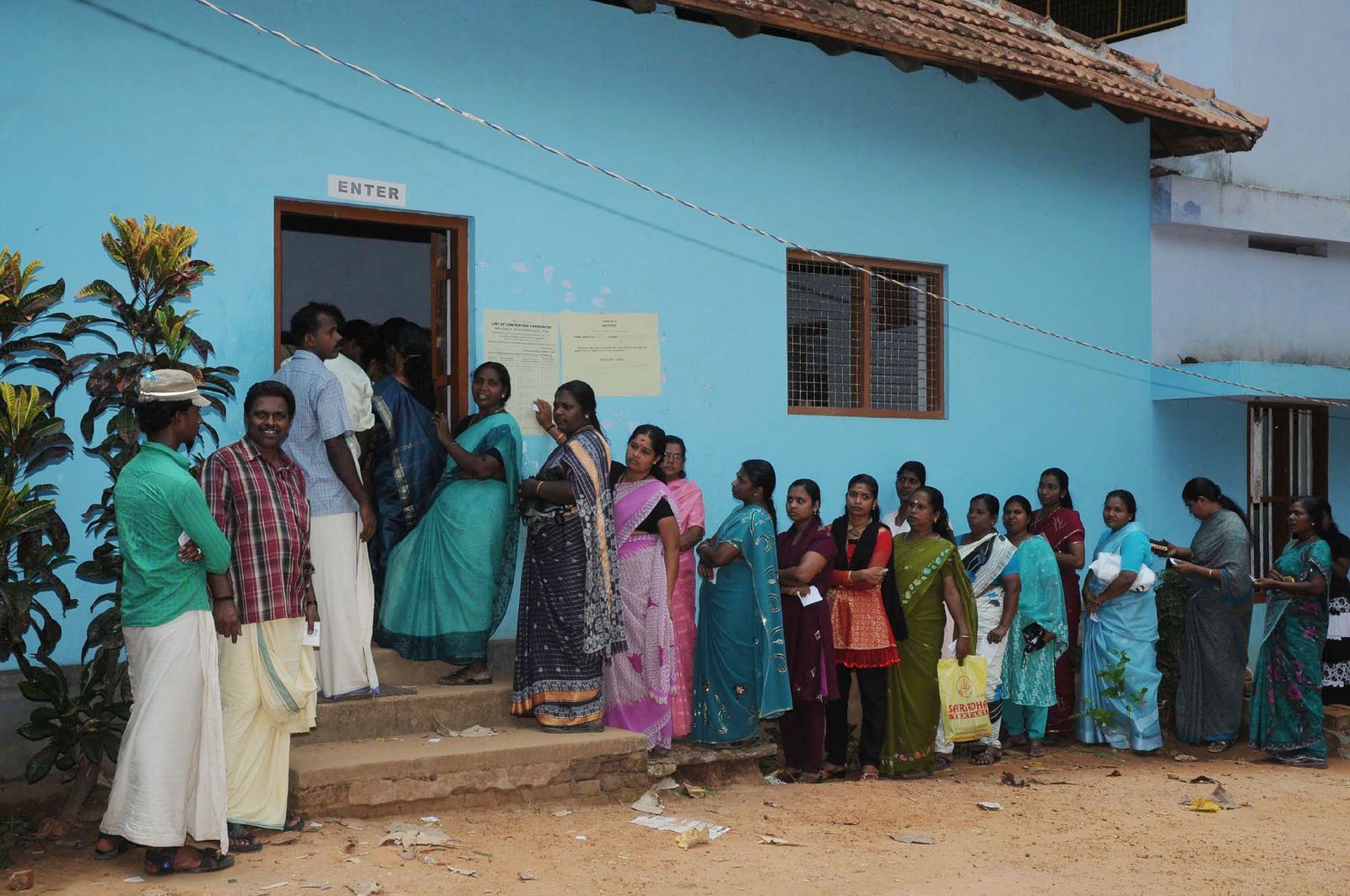
File photo: voters queueing at a polling station in Thiruvananthapuram during the 2011 Kerala Assembly election. Election Commission of India. A long queue of voters at a polling station in the Kerala Assembly Election, at Thiruvananthapuram on April 13, 2011.jpg. Wikimedia Commons. Source URL. Published under GODL-India. Cropped and resized.
The Election Commission of India clarified on Tuesday that voters who were on a previous electoral roll will face no action merely for submitting Form 6, the new-voter form, during the special intensive revision (SIR) or afterwards, The Hindu reported. The clarification turns on a distinction most voters never need to think about: three different forms for three different situations.
Form 6: getting on the roll
Form 6 is the application for inclusion of a name in the electoral roll – the form for a new voter, or for someone whose name is missing from the draft roll and must seek inclusion afresh. The ECI has now told all states that electors whose names do not appear in the draft roll must seek inclusion afresh under the SIR or afterwards, regardless of whether they had been enrolled previously.
The worry it caused
Since August 1, 2022, Form 6 has carried a declaration that the applicant is a first-time voter. Voters who had been enrolled before, and were re-applying because their names went missing, worried that signing that declaration could attract penal action under Section 31 of the Representation of the People Act, 1950. The ECI’s letter says a Form 6 filed in these circumstances “is not, by itself, false” – provided the person is not already enrolled in another parliamentary or assembly constituency and the declaration is otherwise lawful.
Form 8: fixing what is already there
Form 8 is the statutory form for change of residence or correction of entries – the route for a voter who is on the roll but has shifted within or across constituencies, or whose details are wrong. Petitioners in the Delhi SIR case told the ECI that the Supreme Court had orally directed that voters deleted because they had shifted residence should be allowed to submit Form 8 rather than be pushed into fresh enrolment.
The enumeration form: the SIR’s own instrument
The enumeration form belongs to the special intensive revision itself, the exercise in which booth-level officers verify existing electors. Petitioners say the court observed that the 11.73 lakh voters in Delhi marked absent or untraceable should be permitted to fill enumeration forms even at this stage, instead of being forced to enrol as new voters through Form 6 – a requirement the judges described as a “structural incongruity”.
The Delhi High Court had already held on October 14, in Nilotpal Datta vs ECI, that fears that Form 6 amounts to a false declaration were misplaced. Between that ruling and the ECI’s letter, a voter re-enrolling through Form 6 now has two layers of assurance. What remains open is the petitioners’ request on enumeration forms and Form 8 for the deleted voters.